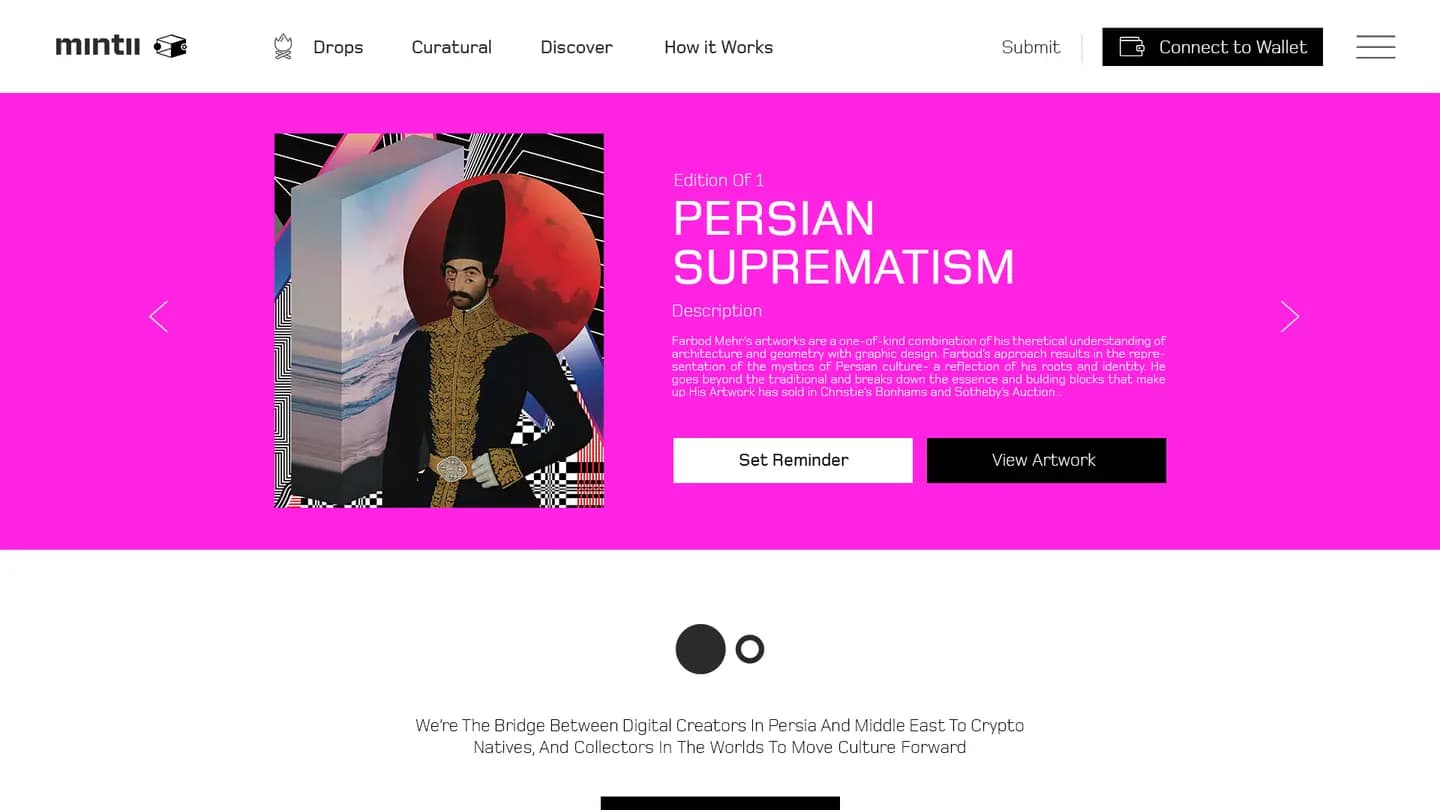
Web3 for people who are not in Web3
Wallets, chains, gas and minting are the entry barrier that keeps most artists out of the market built for them. Mintii needed to bring Persian and Middle Eastern creators and galleries to an international collector base without first turning them into crypto natives — and to do it without the interface reading like an exchange.
The practices this build came out of.
01Web3 product design
02UI/UX
03Front-end architecture
Curation as the organising principle
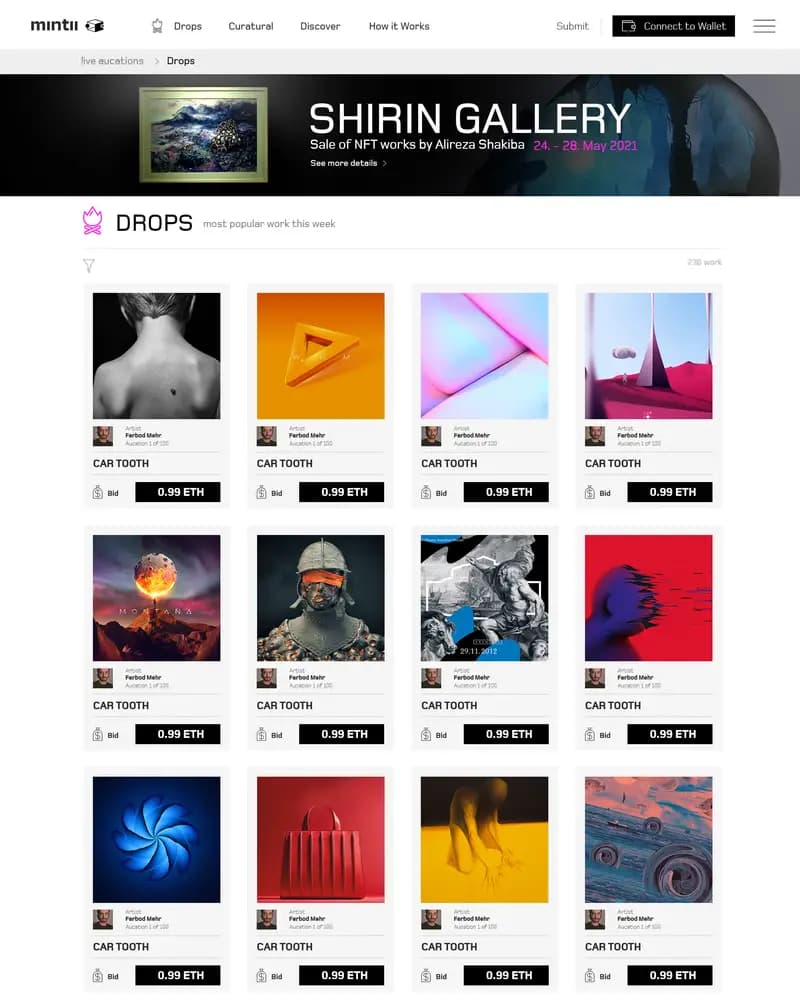
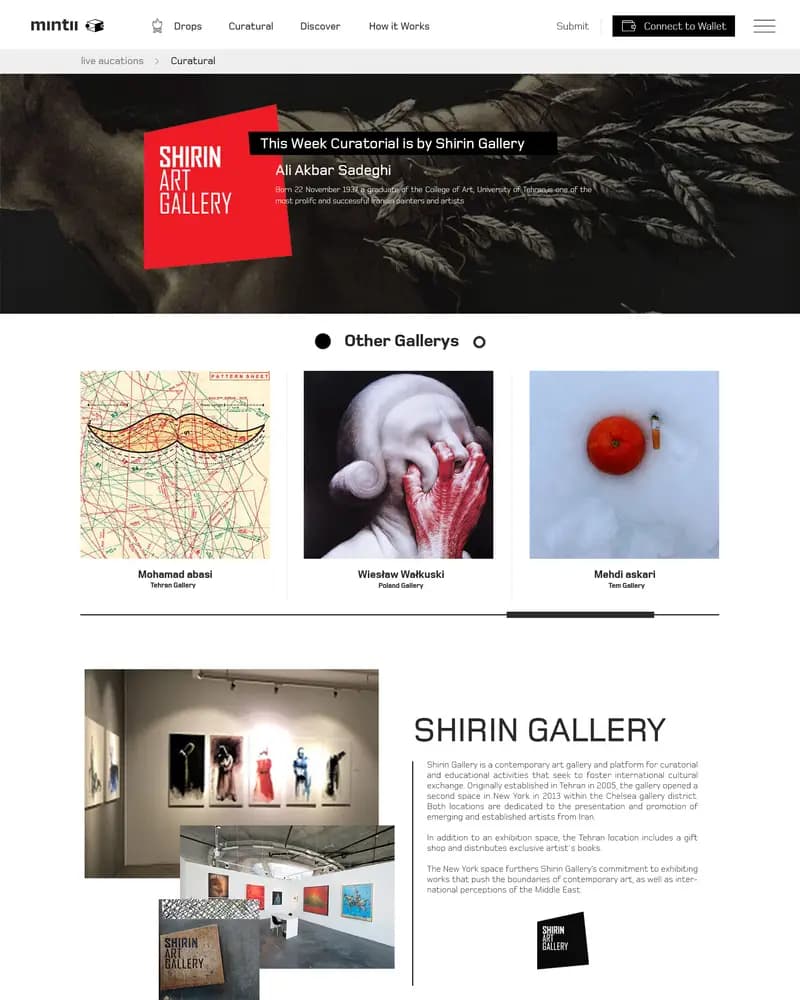
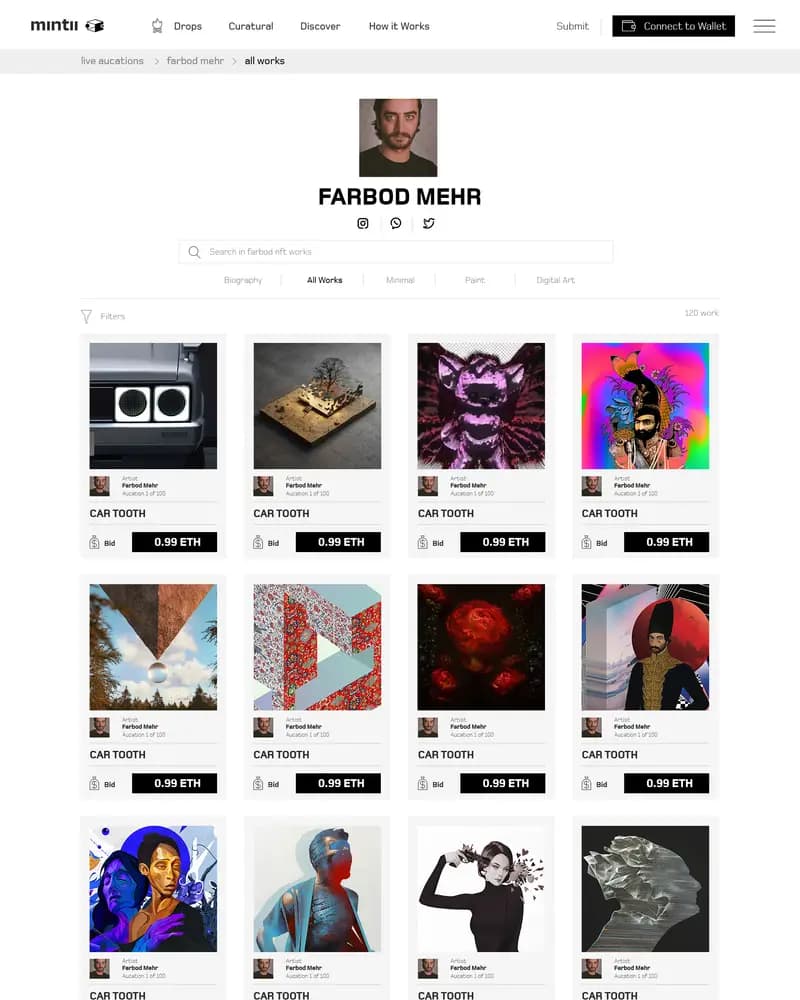
The platform was built as a Next.js and React application with Web3 wallet connectivity and smart-contract-backed auctions, editions and royalties, plus a vault system for fractional and shared ownership and support for AR/VR and physical works. Rather than competing on volume, it led with curation: a weekly slot given to an invited gallery, selected artist portfolios, and drops presented with the pacing of an exhibition.
Borrowed from print, not from a trading screen
The visual system is a black-and-white gallery base broken by vivid magenta and red blocks, so the artwork carries the page. Live auction state is the part that has to be unambiguous, so countdowns, reserve prices and bid states were designed before the browsing grid. Creators, collectors and developers each get their own how-it-works route into the platform.
Traffic, revenue and conversion figures belong to the client, so we do not publish them. What follows is what the delivered build contains.