Skip to content
03 / About

About Cactus Software Group

We go beyond software development to create solutions that drive business growth and transformation.

Cactus Software Group was founded in 2019 with a clear purpose: to transform real business ideas, needs, and challenges into professional, intelligent, scalable, and enduring digital products.

From the beginning, our approach to software development has extended far beyond writing code. We believe successful digital products are created at the intersection of technology, design, user experience, data, and business strategy.

That is why we do not see a project as simply another software delivery. We approach every engagement as a product in its own right — one that should solve a meaningful problem, deliver a strong user experience, perform reliably, and remain ready for future growth.

Today, Cactus brings together specialists across software engineering, web and application development, product design, artificial intelligence, infrastructure, data, and digital technologies to design, build, and evolve modern digital products.

An empty studio desk with two monitors at night
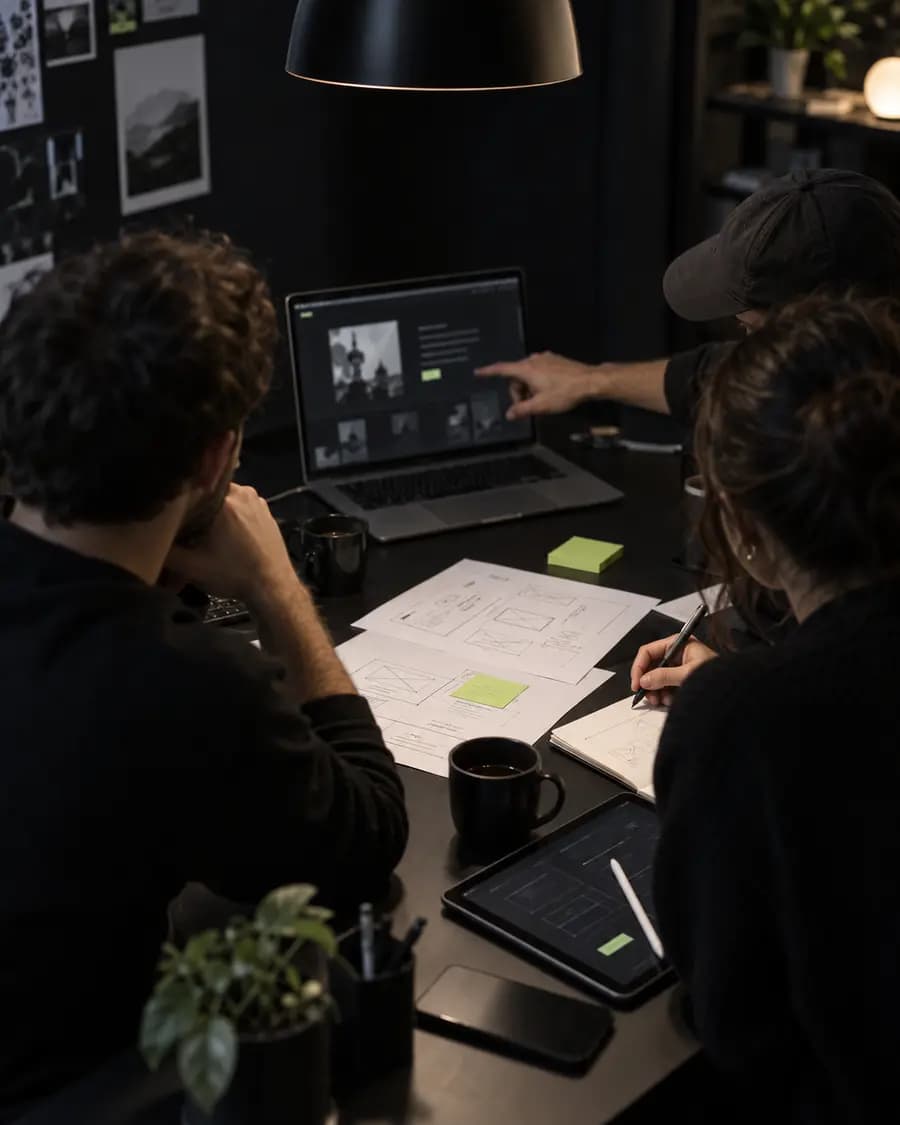
Three colleagues reviewing wireframes around a laptop
A wall of pinned screen designs and wireframes
01

Our Story

Cactus began in 2019 with a focus on designing and developing tailored software solutions.

Over the years, working across different businesses, industries, and technical challenges has allowed us to build experience across a wide range of digital products — from modern web platforms to mobile applications, desktop software, enterprise systems, SaaS products, real-time platforms, APIs, cloud infrastructure, and AI-powered solutions.

As technology has evolved and business needs have become more complex, Cactus has continued to evolve with them.

Today, our role goes far beyond delivering a website or application. We aim to become a true technology partner, supporting businesses from the earliest stages of ideation and product definition through architecture, design, development, deployment, data strategy, optimization, scaling, and long-term support.

02

What We Do

Cactus provides an integrated range of software engineering and product development services, allowing businesses to build and grow digital products with one coordinated technology team.

Our core focus includes custom platforms, modern web applications, SaaS products, enterprise systems, mobile and desktop applications, APIs, real-time systems, and AI-powered products.

For modern web development, technologies such as Next.js, React, and Node.js form a significant part of our engineering ecosystem. They enable us to create products that are fast, modern, scalable, maintainable, and suitable for businesses at different stages of growth.

On the backend, we focus on designing robust APIs, modular architectures, real-time services, background processing systems, queues, caching layers, authentication, access control, and scalable infrastructures.

Where appropriate, CMS-based solutions such as WordPress may also be part of our capabilities. However, our primary focus remains on building custom-engineered products designed around the specific needs of each business.

03

Artificial Intelligence for the Next Generation of Products

For us, artificial intelligence is not simply an additional feature or a passing trend.

We see AI as a fundamental part of the next generation of digital products, and we integrate it where it creates meaningful, measurable value.

These capabilities may include AI assistants, natural language processing, voice processing, content generation, intelligent classification, semantic search, information extraction, process automation, recommendation systems, and experiences powered by large language models.

Our goal is not to add an AI label to a product. It is to use artificial intelligence to reduce manual work, accelerate decision-making, improve user experiences, automate complex processes, and unlock capabilities that were previously difficult or uneconomical to achieve.

When designing AI-powered systems, we also consider critical factors such as data security, processing costs, response times, model selection, system reliability, and long-term scalability from the beginning.

04

Data at the Core of Modern Products

Much of the value within a modern software product is built on its data.

For this reason, data architecture and database selection are among the most important decisions we make when designing a system.

Depending on the requirements of each product, we work with technologies and databases such as PostgreSQL, MySQL, MongoDB, Redis, and SQLite, designing data structures around the real operational needs of the platform.

For products with higher traffic or larger data volumes, areas such as caching, indexing, replication, queue processing, data modeling, performance optimization, and database scaling become an integral part of the technical architecture.

To us, a database is not simply a place to store information. It is one of the core foundations of a product and must be designed for performance, security, reliability, and future growth.

05

Our Approach

For us, the success of a project is not measured by delivery alone.

A product is successful when it creates genuine value for its users and the business behind it.

Before development begins, we work to understand the problem at its core. We consider business goals, target users, workflows, technical limitations, revenue models, data requirements, security considerations, and the future direction of the product.

Only then do we define the architecture and technology stack.

We do not force a particular technology into every project. Technology decisions should always be the result of understanding the problem first.

Throughout development, design, frontend, backend, data, infrastructure, and user experience are not treated as isolated disciplines. They must work together to create a product that is aligned across performance, usability, security, architecture, and scalability.

06

From Idea to Product

Many of the projects we work on begin with little more than an idea, a challenge, or an unmet business need.

We can join the process at that very stage.

We begin by understanding the problem, shaping the product structure, defining the technical direction, and then designing and developing the solution step by step.

The journey may begin with a focused MVP and later evolve into a complete platform supporting thousands of users, millions of data records, administrative systems, mobile applications, custom APIs, real-time services, intelligent processing, and scalable infrastructure.

Our goal is to ensure that the technical decisions made today do not become barriers to the product's growth tomorrow.

07

Architecture Built for Growth

Software architecture is one of the most important foundations of any serious digital product.

As a product grows, so do its users, data volume, feature set, and the complexity of communication between different components.

That is why we design systems with a long-term perspective.

Depending on the project, we may use approaches such as modular architectures, REST APIs, WebSockets, asynchronous processing, queue systems, caching layers, background workers, and independently scalable services.

Our objective is not to introduce unnecessary complexity. It is to engineer each product to exactly the level it requires, while ensuring there is room for growth without costly rewrites.

08

Engineering Meets Design

At Cactus, design and engineering are not separate parts of the product.

A beautiful interface only becomes valuable when it is supported by strong performance, thoughtful architecture, and a seamless user experience.

That is why UI/UX, software architecture, data models, frontend, backend, and infrastructure are considered together from the early stages of development.

On the frontend, technologies such as React and Next.js allow us to create fast, interactive, modern experiences while addressing critical factors including SEO, performance, accessibility, and usability.

The result is a product that is not only visually refined, but technically reliable and built for continuous evolution.

09

Technology With Purpose

We do not choose technology simply because it is new or popular.

Every technology used in a project must serve a clear purpose.

For one product, a simple and focused architecture may be the right choice. Another may require real-time processing, WebSockets, queues, Redis, distributed services, AI processing, or cloud-based infrastructure.

What matters is that the selected solution aligns with the actual needs of the product in terms of cost, complexity, performance, security, and maintainability.

Simplicity is valuable when it is sufficient. Complexity is justified only when the problem genuinely requires it.

10

Real-Time and Connected Products

Many modern applications need to move information instantly between users, devices, and services.

Our experience with real-time systems allows us to build capabilities such as messaging, live notifications, real-time dashboards, data synchronization, presence systems, and communication across multiple platforms.

Technologies such as WebSockets, Socket.IO, Redis, and queue-based processing can play an important role in these architectures.

These systems must be designed not only for speed, but also for resilience — handling network interruptions, reconnections, traffic spikes, and unexpected failures in a predictable and reliable way.

11

Quality Designed to Scale

One of our core principles is building software that can evolve over time.

That means paying close attention to software architecture, clean code, security, documentation, performance, testability, maintainability, and scalability throughout the development lifecycle.

Good code is not simply code that works today.

Good code should remain understandable, maintainable, and extensible months and years later.

Our goal is to build products where adding new capabilities does not require dismantling what has already been built.

12

Security From the Beginning

Security is not something we add at the end of a project.

From the earliest stages, we consider areas such as authentication, authorization, role-based access, API protection, session and token management, data validation, database security, event logging, and protection of sensitive information.

The appropriate security model is determined by the nature of the product, the sensitivity of its data, and the way the platform is used.

By integrating security into the architecture from the beginning, we create products that are more resilient, maintainable, and trustworthy.

13

Infrastructure & DevOps

Strong products require more than strong code. Infrastructure plays a critical role in the overall reliability and performance of a digital platform.

For products that require dedicated infrastructure, we work with technologies and practices such as Docker, Linux, reverse proxies, CI/CD pipelines, PM2, Redis, process management, monitoring, backups, and deployment automation.

Our objective is to make releases faster, safer, and more predictable while ensuring that production environments remain stable, observable, and resilient.

14

Long-Term Partnership

For us, launching a product is not the end of the journey.

In many cases, the first release is where the real life of the product begins.

As real users interact with the platform, usage patterns emerge, data grows, new requirements appear, and opportunities for improvement become visible.

Cactus can continue to support products through technical maintenance, monitoring, issue resolution, performance optimization, new feature development, security improvements, architectural evolution, and infrastructure scaling.

We see long-term collaboration as an opportunity to understand the product more deeply and continuously make it better.

15

The Cactus Team

The strength of Cactus is its people.

Our team brings together specialists from different disciplines who combine their experience and knowledge to build better products.

Frontend and backend developers, Node.js and React/Next.js engineers, mobile and desktop developers, UI/UX designers, database and infrastructure specialists, and digital product experts work together to evaluate every project from multiple perspectives.

Our experience also includes platforms such as WordPress when a project calls for it, but the core of our expertise is centered on engineering modern, custom-built software products.

Our culture is built around continuous learning, ownership, collaboration, transparency, and quality.

We believe the best products are created by teams that understand not only technology, but also the business problem and the people who will ultimately use the product.

16

Our Values

01

Quality Before Short-Term Fixes

Speed matters, but not at the cost of technical debt, poor user experiences, or decisions that create greater costs in the future.

We aim to maintain the right balance between fast execution and strong engineering standards.

02

Simplicity Within Complexity

Software systems can become highly complex, but users should not feel that complexity.

One of our most important responsibilities is turning difficult technical problems into experiences and solutions that feel simple, intuitive, and manageable.

03

Transparency

Throughout every project, we aim to keep progress, technical decisions, limitations, and challenges clear to everyone involved.

For us, transparency is a fundamental part of a professional partnership.

04

Continuous Learning

Technology evolves rapidly.

Artificial intelligence, software architecture, modern frameworks, databases, and infrastructure technologies are constantly changing.

Continuous learning, experimentation, and technical exploration are therefore part of the everyday culture at Cactus.

05

Long-Term Thinking

We do not build products only for launch day.

Architecture, data, infrastructure, and user experience should all be capable of supporting the future direction of the product.

06

Ownership

Every project represents a real commitment.

We take responsibility for the quality of the code we write, the technical decisions we make, and the products we deliver.

17

Our Mission

Our mission is to reduce the distance between an idea and a real, intelligent, scalable digital product.

We help businesses transform ideas, workflows, and challenges into powerful software without becoming overwhelmed by technical complexity.

By combining software engineering, product design, data, automation, and artificial intelligence, we turn technology into a practical engine for productivity, better experiences, innovation, and business growth.

18

Our Vision

Our vision is to become a trusted technology partner for building and evolving the digital products of the future.

We want Cactus to be known not simply as a software development company, but as a team capable of understanding a problem, designing the right architecture, and transforming it into a real product through the combination of technology, design, and data.

Products that solve today's challenges while remaining ready for tomorrow's opportunities.

19

Why “Cactus”?

Cactus is more than a name to us.

It represents growth, adaptability, resilience, and longevity — qualities we aim to bring into every product we build.

A strong product should be able to grow under changing conditions, adapt to new demands, withstand challenges, and continue creating value over time.

That philosophy has shaped the direction of Cactus since 2019.

20

Building What Comes Next, One Product at a Time

From an early-stage MVP to a complete SaaS platform, from a high-performance Next.js application to a robust Node.js backend, from real-time systems to AI-powered products and data-driven infrastructures, we approach every project with one principle:

Technology should solve a real problem and create real value.

At Cactus Software Group, we bring together engineering, design, data, and artificial intelligence to build products that do more than simply work — products that are fast, intelligent, secure, scalable, and built for growth.

Cactus Software Group

Since 2019, building enduring digital products and technology for what comes next.

Start a projectGet in touch
06 / Team

Cactus Team Managers

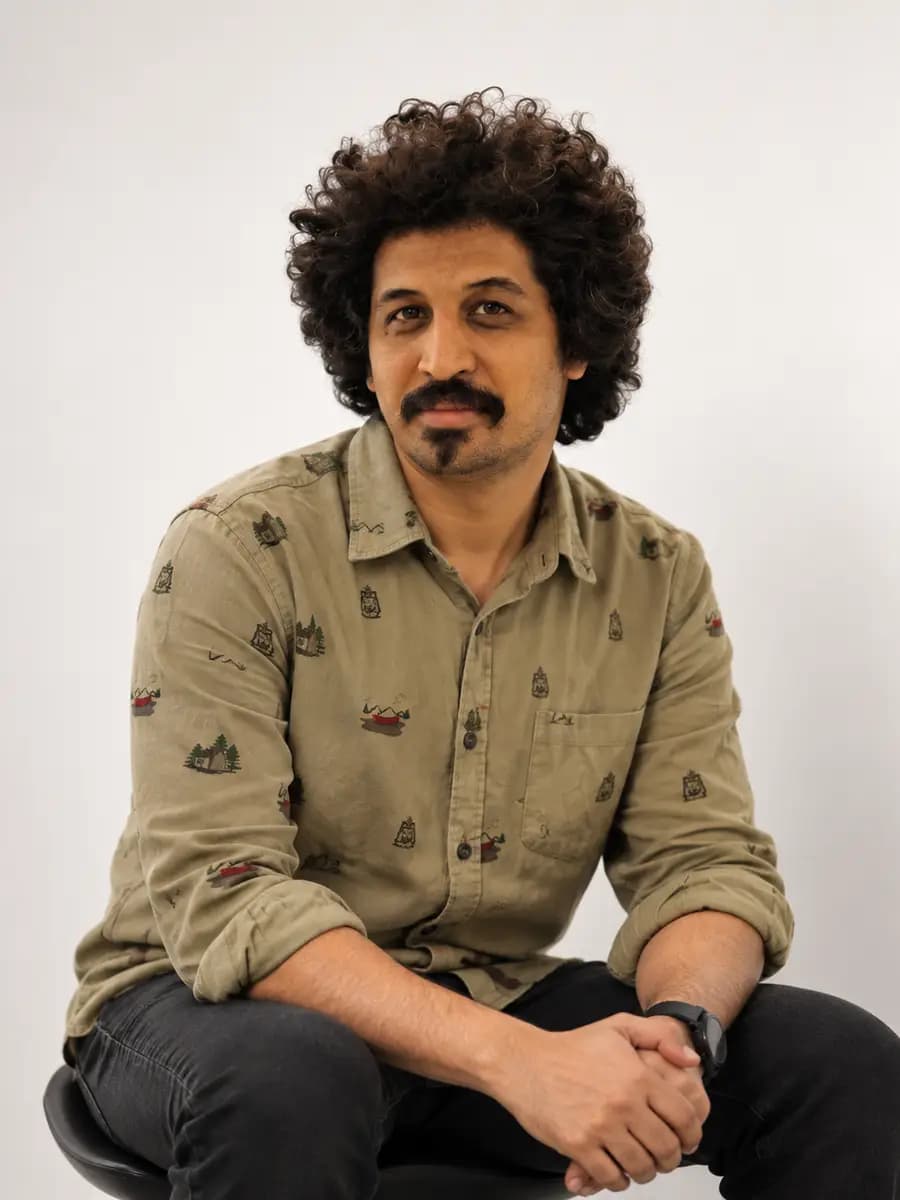
Omid leads the technical vision at Cactus, working at the intersection of software architecture, product strategy, and user experience. His expertise spans modern frontend and backend development, scalable system architecture, real-time applications, cross-platform solutions, API design, databases, cloud infrastructure, and AI-powered products.

Beyond development, he is deeply involved in transforming early-stage ideas into complete digital products — defining technical direction, shaping product architecture, solving complex engineering challenges, and guiding projects from concept and prototype through production and long-term evolution.

With experience across more than 70 projects, Omid approaches technology not simply as code, but as a tool for solving real business problems and building products designed to perform, scale, and endure.

Ali Manoochehri, Senior business consultant

Ali Manoochehri

Senior business consultant

Brings a strategic read to complex business problems, aligning ideas, opportunities and technology with sustainable growth and long-term objectives.

Fahimeh Azizi, Senior WordPress expert

Fahimeh Azizi

Senior WordPress expert

Specialises in sophisticated WordPress builds, combining technical depth with performance, flexibility and a close eye on detail — custom themes and plugins rather than assembled templates.

Mohammad Eshaghiyan, Senior UI/UX & graphic designer

Mohammad Eshaghiyan

Senior UI/UX & graphic designer

Shapes the visual language behind the work, blending strategy, aesthetics and usability into interfaces and brand experiences that stay distinctive once they are in production.

Nooshin Alizadeh, Senior SEO specialist

Nooshin Alizadeh

Senior SEO specialist

Drives organic growth through data-informed SEO: search visibility, content performance and technical optimisation, measured over quarters rather than weeks.

Work withThe people whobuild it.

Tell us what you are building. We will tell you what we would do first.